
Brain tissues, assemble! Inside the push to build better brain models
With organoids, assembloids and a growing bioengineering toolkit, scientists are pushing the limits of human brain models.
In the 2015 Pixar film
Inside Out, a young girl’s mind is brought vividly and hilariously to life through a cast of animated archetypes, each representing a distinct facet of emotion or thought. The brain, in this portrayal, is a modular structure, composed of interlocking yet discrete parts — a concept that mirrors one of the most advanced models in modern neuroscience.
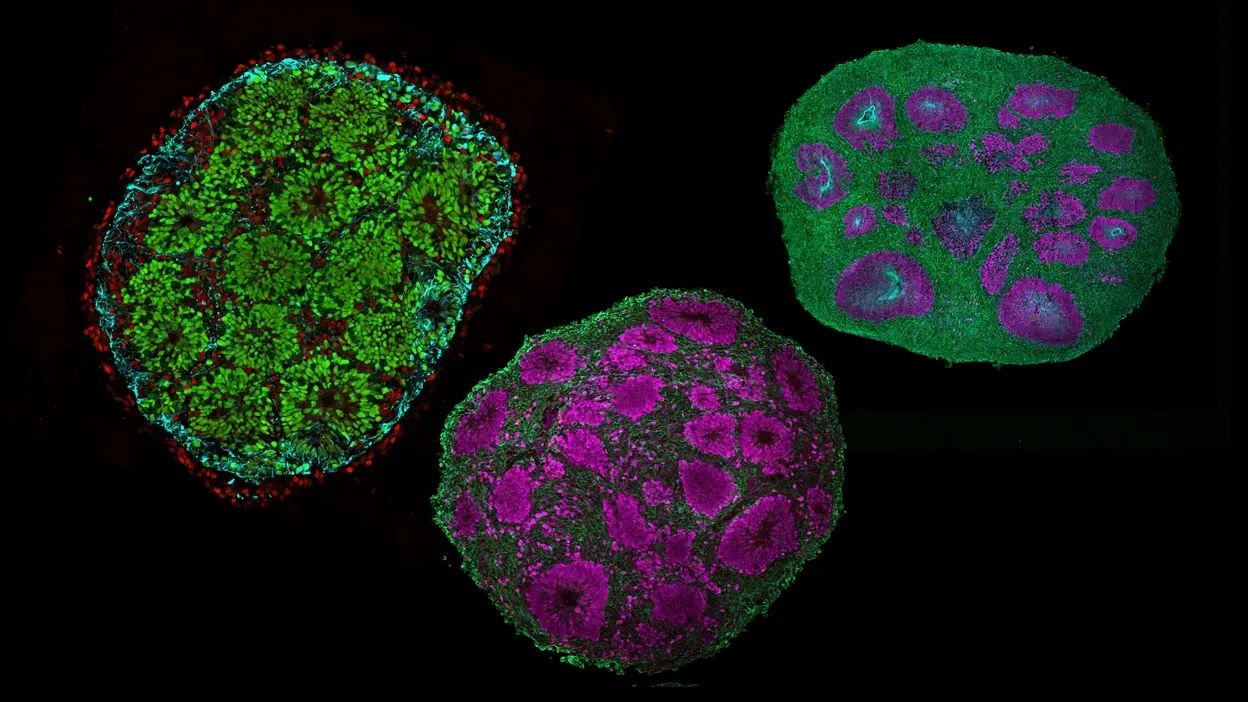
Over the past decade, researchers have coaxed stem cells to form 3D clusters of neural tissue known as organoids, bathing the cells in carefully formulated chemical cocktails to generate brain regions such as the thalamus, where sensory information is processed, and the striatum, which integrates movement and reward signals.
Initially, efforts focused on isolated, region-specific models. But today, researchers routinely fuse organoids representing distinct brain areas to create unified ‘assembloids’, capable of reconstructing functional neural networks and offering insights into brain connectivity, development and disease. “It has opened a new direction in the field to really understand interactions between different parts of the brain,” says In-Hyun Park, a stem-cell biologist at the Yale School of Medicine in New Haven, Connecticut.
Continue reading at Nature.