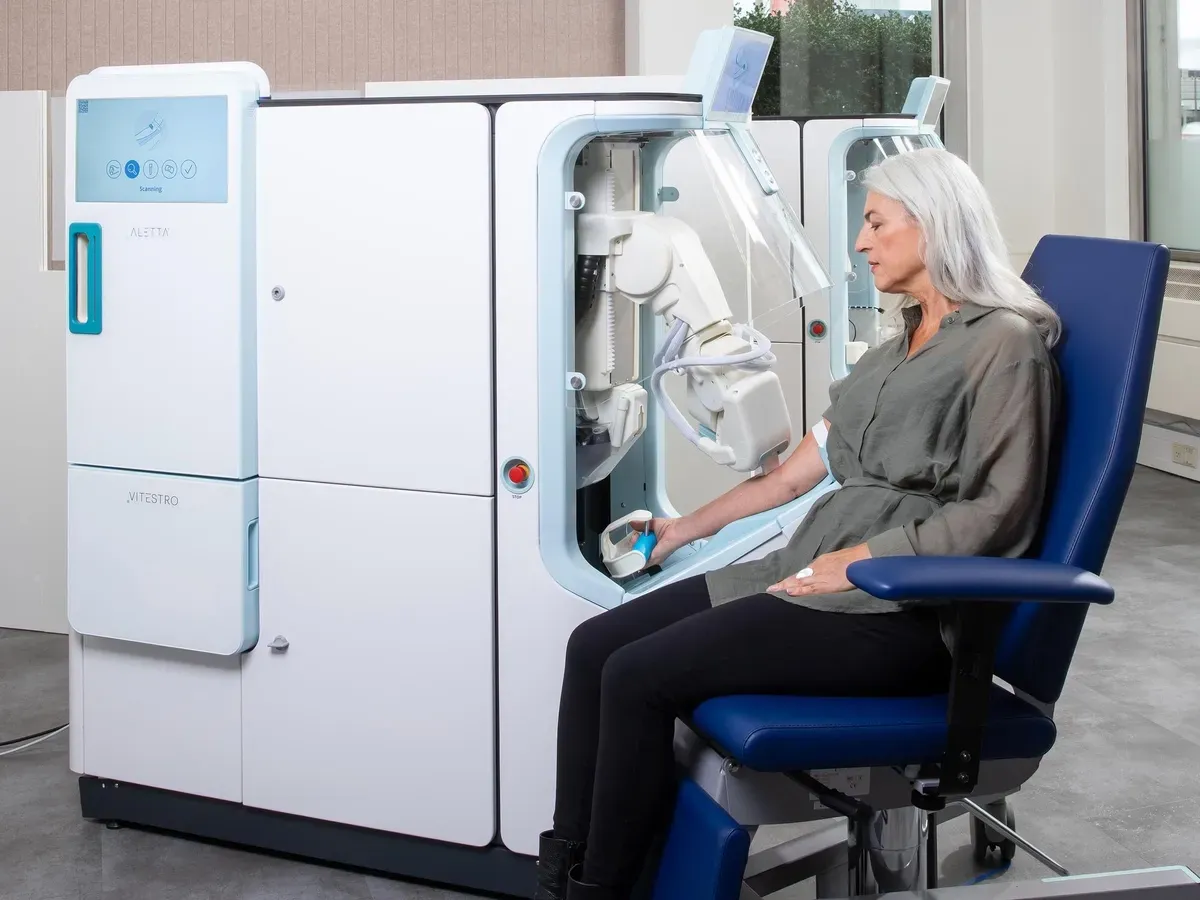

New device could keep weight off after GLP-1 drugs
Destroying dysfunctional tissue could reset metabolism.
Christina had tried dieting and exercise before. The weight always came off but then crept back on, especially after she gave birth to her son in 2022.
She had hoped that a new class of weight-loss drugs might finally offer something different. Obesity treatments such as Wegovy and Zepbound had just arrived on the scene, helping people slim down with unprecedented ease. But the price tag of these GLP-1 drugs put them out of reach. Christina’s health insurance wouldn’t cover the cost.
Desperate for another option, Christina enrolled in a clinical trial that guaranteed several months on a blockbuster weight-loss therapy—and then the possibility of something more. (Christina, a Texas woman in her early 50s, asked that her last name be withheld to protect her privacy about her weight-loss treatment.)
That something more wasn’t another injection or pill, but a one-time procedure using a new medical device. And instead of targeting the stomach or brain, it focused on the gut itself: rewiring how a part of the upper intestine, known as the duodenum, processes nutrients and regulates metabolism.
Continue reading at IEEE Spectrum.